Nutrition follow-up for personal trainers: organise diaries and client conversations
Clarify entries, understand the limits of totals and choose a practical next step with the client.
Short answer
Useful nutrition follow-up begins with a focused question and an understood recording routine. Distinguish planned meals from reported entries, check quantities and keep the limits of estimates clear. Prepare a conversation and next step within your qualifications rather than infer a diagnosis from a displayed total.
One client completes their food diary for three days and then stops. Another records every meal but uses portions that are difficult to compare. Nutrition follow-up for a personal trainer involves more than displaying calories and macros: it should support a useful conversation and an understandable next step.
This guide explains how to organise that process within your qualifications and coaching arrangements. It focuses on habits, information quality and client reviews. It does not offer a universal diet or a method for managing a medical condition through a coaching application.
What purpose should a food diary serve?
Before asking for entries, explain what you want to understand. Are you identifying meals that are difficult to organise, discussing portions or exploring how eating habits fit around training? The client should be able to connect the effort of recording with a concrete question.
Avoid requesting every possible detail simply because the tool supports it. Choose a routine that fits the person’s life and explain when you will read the information. A diary nobody reviews quickly loses its purpose from the client’s perspective.
The NIDDK guide to changing habits presents tracking actions and experience as part of understanding obstacles. Translate that idea into a focused question within your method rather than an obligation to measure every aspect of the client’s daily life.
In a fictional example, a client who finishes work late wants to organise evening meals more effectively. The first review considers relevant days, available options and practical difficulties. It does not necessarily begin by introducing another numerical target or a more complicated tracking routine.
How does a meal plan differ from a food diary?
A plan describes an intended arrangement. A diary describes recorded information. A planned meal does not prove consumption, and an incomplete diary does not mean no meal happened. That distinction should remain visible when you discuss the available entries.
When a client uses a meal checklist, explain what checking an item means and how to report a difference. If the quantity changes or a food is replaced, the useful information concerns the meal actually reported rather than the completed checkbox alone.
Check for duplicate entries before interpreting totals as well. The same meal may be entered through more than one route or be misunderstood by the client. Ask what was recorded before turning an unusual displayed total into a conclusion about their habits.
The diary supports a conversation. It represents available entries, including their approximations and omissions; it is not a perfect measurement of actual food intake.

Which instructions make food entries easier to understand?
Show an example on a phone. The client should know how to find the correct day, identify a food and choose a quantity in the relevant unit. A number without a clear unit might represent a portion, a weight or a count of items, making comparisons uncertain.
Explain how to handle unknown information. Reporting an estimate with context is more useful than searching for imaginary precision. The review can then focus on information reliable enough to discuss a practical habit or ask a better question.
- Check
- Selected day
- Question to ask
- Was the meal entered on the right day?
- Possible decision
- Correct before comparing
- Check
- Food or recipe
- Question to ask
- Does the entry match what is reported?
- Possible decision
- Clarify the selection
- Check
- Quantity and unit
- Question to ask
- What does this value represent?
- Possible decision
- Put portions in context
- Check
- Missing entry
- Question to ask
- Forgotten recording or unavailable information?
- Possible decision
- Adapt the routine
- Check
- Experience
- Question to ask
- Which moment is hard to organise?
- Possible decision
- Choose a practical next step
| Check | Question to ask | Possible decision |
|---|---|---|
| Selected day | Was the meal entered on the right day? | Correct before comparing |
| Food or recipe | Does the entry match what is reported? | Clarify the selection |
| Quantity and unit | What does this value represent? | Put portions in context |
| Missing entry | Forgotten recording or unavailable information? | Adapt the routine |
| Experience | Which moment is hard to organise? | Choose a practical next step |
Do not turn application proficiency into a test of motivation. Recording difficulties may involve unfamiliar terminology, eating away from home or limited time. The first adjustment may concern the follow-up method itself rather than the client’s eating habits.
How should you read calories and macros without false precision?
Totals depend on selected foods and recorded quantities. They can inform a discussion, but displaying them does not make the underlying entries exact. Check information that could explain an important difference before commenting on the result or changing a target.
The TDEE calculator provides a starting estimate. It can help explain the assumptions behind monitoring without becoming a definitive individual measurement. Subsequent coaching should account for observations, circumstances and the professional’s qualifications rather than rely on the calculator alone.
A macro ratio should not obscure a practical difficulty. If the client cannot organise meals around their schedule, another numerical value may add complexity without resolving the identified obstacle or making the routine easier to maintain.
In a fictional example, a total looks unusually high after an entry whose quantity was misunderstood. The coach clarifies the portion and unit first. They do not immediately modify targets based on that uncertain entry or ask the client to compensate for it.
How can you prepare a useful nutrition check-in?
First ask whether the recorded days represent the period being discussed. A diary completed only on easier days provides a partial view. It can still be useful as long as neither person treats it as an account of the entire week.
Then choose one observation and question. “I noticed evening meals are less often recorded; what makes that moment difficult?” opens the discussion more effectively than “why did you fail to follow the plan?”. The question should allow a reply without requiring an extensive personal justification.
Finish with a small, identifiable action: clarify how to record one meal, prepare an option for a busy day or discuss a recurring constraint. Agree on the next review and check how the client understands the proposed step before adding more tasks.
The weekly personal training check-in helps connect this topic with the rest of follow-up. It lets you discuss eating habits, training and organisation without blending every observation into one overall score whose meaning is difficult to explain.
What if a client stops completing their diary?
Ask what changed before assuming they abandoned the process. Was the routine too time-consuming? Were some entries difficult to find? Does the client still understand why the diary matters? Reduced recording is a signal to investigate rather than evidence of missed meals.
In a fictional scenario, a client stops logging after starting shift work. The coach discusses a simpler routine and review times that fit the new circumstances. They preserve the purpose of the follow-up without asking for every forgotten meal to be reconstructed.
If monitoring causes significant distress or the situation exceeds your qualifications, refer to an appropriate health professional. Habit tracking does not replace care for a medical condition or an eating disorder, even when the application can display detailed nutritional information.
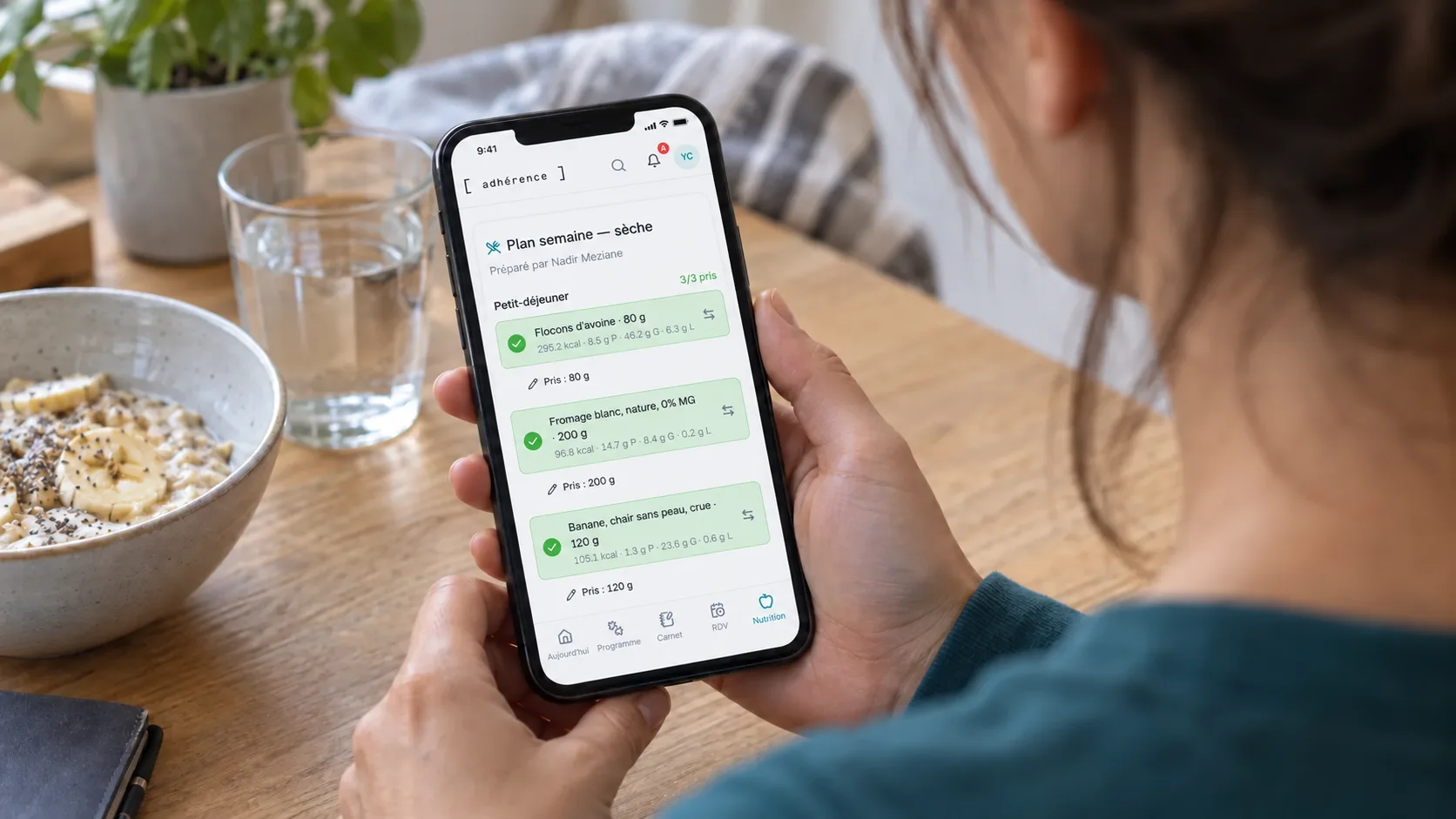
How can Adhérence centralise nutrition follow-up?
Pro includes TDEE and macro targets, a food diary and weight tracking. Meal plans and recorded information provide a base for preparing a client conversation. Check the current plans for the functions available in your subscription and coaching workflow.
The programme and logged training remain within the same coaching journey. You can prepare a review by connecting useful observations while retaining their limits: the software does not diagnose a nutritional condition or decide an individual adjustment on your behalf.
For a fat loss goal, interpret weight with its context. For a muscle gain goal, distinguish performance from body changes. The diary should answer a follow-up question relevant to the individual person rather than become the same rigid task for every client.
Explain the purpose of data and limit collection, as the CNIL’s principles describe. Meal photos and personal details should have an identified use within the coaching arrangement before they are requested from the client.
What should you check before the next review?
- The client understands why they are recording meals.
- Frequency and review timing have been discussed.
- Quantities, units and estimates are understandable.
- Missing entries are distinguished from uneaten meals.
- One observation leads to a focused question.
- The next step fits professional qualifications and the coaching scope.
Frequently asked questions about client nutrition follow-up
Should every client complete a full diary every day?
Choose a routine according to the goal, usefulness and the person’s comfort. Collecting more information does not automatically improve the conversation or the decisions that come from the review.
Can you change a target after one unusual day?
Check entries and circumstances first. One isolated day is not enough to explain a pattern or justify several simultaneous changes to the client’s coaching arrangement.
Does a food diary replace a dietitian?
No. It supports observation and conversation. The nature of advice depends on professional qualifications and the situation; a medical need requires appropriate professional care rather than a software-derived response alone.
Key takeaways
Useful nutrition follow-up connects recording with a question and a next step. Explain data limitations, adapt the routine to the client’s life and prepare a contextual review. Diaries and targets serve the conversation; on their own, they do not constitute an individual nutrition prescription.
Sources
- Changing Your Habits for Better Health · National Institute of Diabetes and Digestive and Kidney Diseases (NIDDK)
- The six core GDPR principles · CNIL
- Adhérence plans and features · Adhérence
Keep reading
Two related guides for turning an observation into a sustainable tracking method.